About
Christian Gluch.
Building software since 1989, from development through architecture to AI integration. In 37 years I have learned to judge tools soberly. I use AI where it genuinely makes a product better, and I make sure responsibility stays with people.
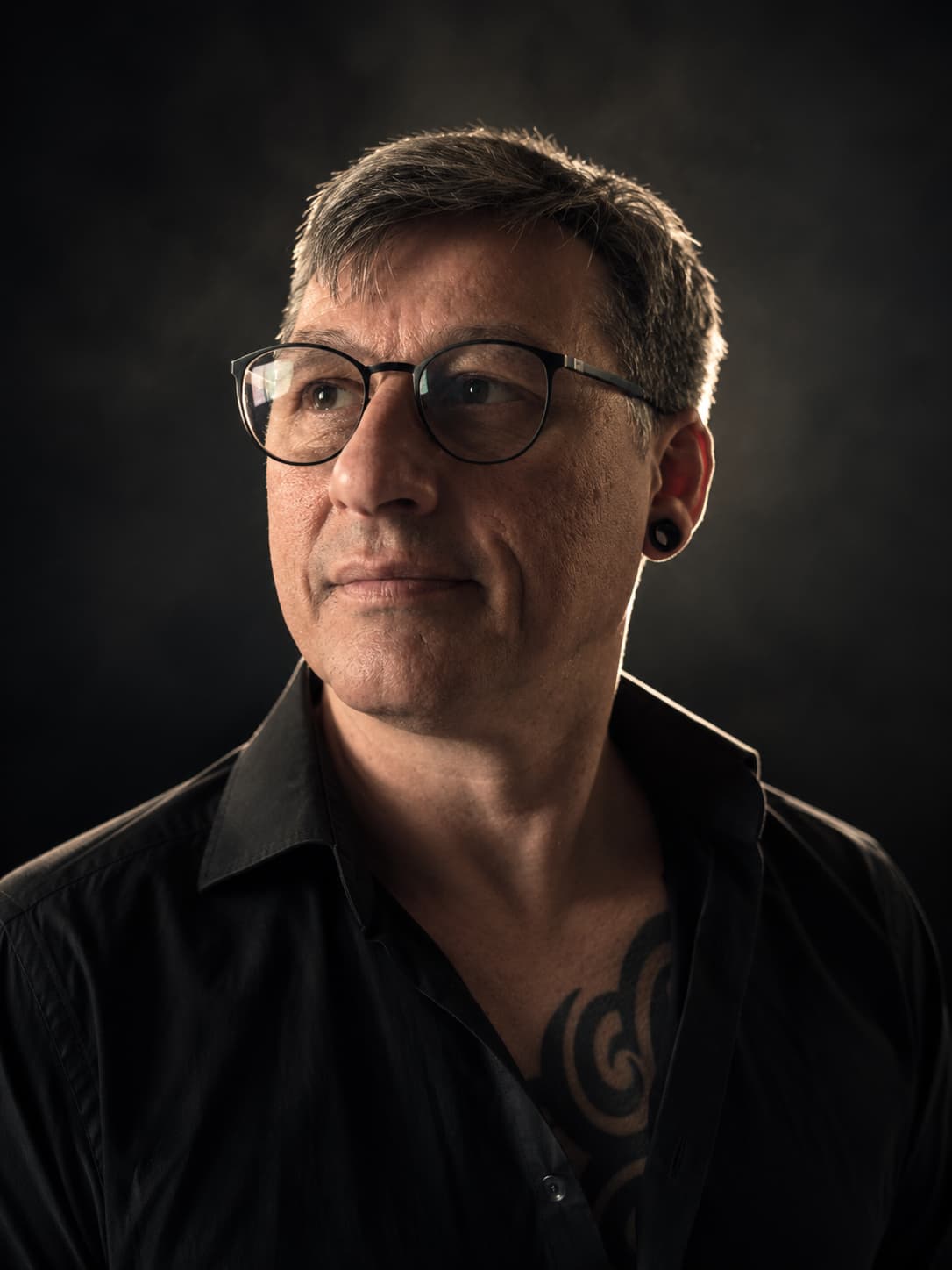
I'm currently Lead Software Architect at Bergx2 GmbH in Munich. I own the architecture of our B2B software, from long-lived client systems to AI integration. Day to day, it's architecture decisions, development with AI agents in the team, and the question of what AI genuinely makes better for a client product and what only looks good.
AI isn't a buzzword for me, it's daily practice, professionally and privately. I work with the whole range: language models and AI agents, RAG, vision, and voice. My machine is a fully specced MacBook Pro M5 that also runs local models, alongside the strongest models from Anthropic and OpenAI. I keep testing what's possible, because the field fascinates me well beyond work too.
Before that I worked internationally for many years, including in England, Switzerland, and Sweden, for large, well-known companies. From industrial communication through tech-lead roles to IT security, those stations shape how I approach software today, with an eye on whether something will still hold up in five years.
How I work
How I work.
How I work has barely changed over the years. These principles decide more in day-to-day work than any single tool.
Bring stakeholders along
Software isn't built in a vacuum. I keep the people who work with the result, or pay for it, in the picture from the start: transparent progress, clear decisions, explained so non-technical people understand them too. The result is no surprises at the end, just what was actually needed.
Code quality, no shortcuts
Code is read far more often than it is written. I care about clear naming, small understandable units, consistent conventions across the project, and tests that secure behaviour rather than just cover lines. Speed comes from good decisions, not from skipped care that gets expensive later.
Documentation on three levels
What isn't written down doesn't exist for the next team. I document on three levels: structured project documentation in clean Markdown, meaningful comments in the code that explain the why, and consistent conventions everyone follows. That makes a project handover-ready instead of tied to one person.
Architecture as foundation
If a system has to last, the underlying structure must be right before features go on top. Every architecture decision goes through the same question: will this still hold up in five years, or become a breaking point? Better to draw a clean boundary early than to rebuild during live operation.
Vision with a delivery path
A good idea differs from a pretty pitch in one detail: someone can actually build it. I'd rather plan three steps that land than ten that stay in the presentation. In the end, what runs in production is what counts.
AI where it counts
AI is a tool, not an end in itself. I assess soberly where it genuinely makes a product better, then integrate it so it runs reliably in production. Where it only looks good but adds nothing, it stays out.
off-code
When the editor is closed.
When I'm not at the code, I'm outside. Hiking in the mountains, exploring new places, travelling without a fixed plan. Nature is the best reset I know, much better than any new framework.
Music is almost always running. While working, in the car, in the evening. And along for everything: my dog Mia, with probably more trail kilometres in her bones than most two-legged hikers.